Your brand, your band plan
When an integrator needs its own product line, we supply it: band plan, power class, enclosure, interfaces and nameplate.
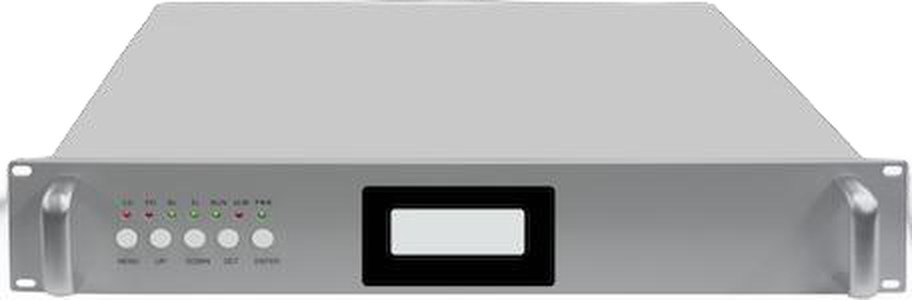
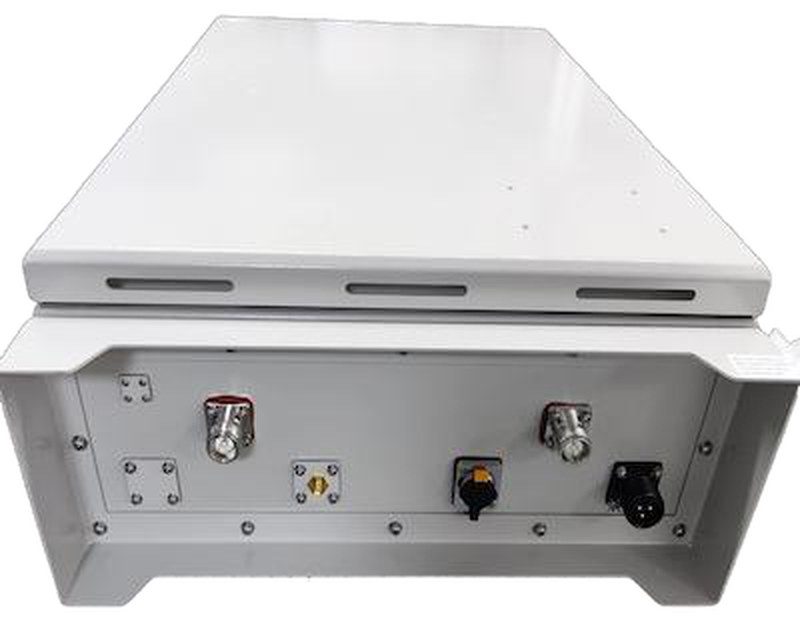
What can be adapted
Your requirements become a build specification covering the items below.
- Band plan
- Sub-bands
- Gain and power
- Enclosure
- Alarms
- Interfaces
- Nameplate and management interface
Standard units under Rays Coverage, or your name on the nameplate and the management interface.
One mainboard, one management stack, modular assembly
Every repeater and remote unit is built from the same RF modules, combiners and controller, so a custom band plan or power class is mostly a configuration of existing modules; new filter tunings are quoted separately.
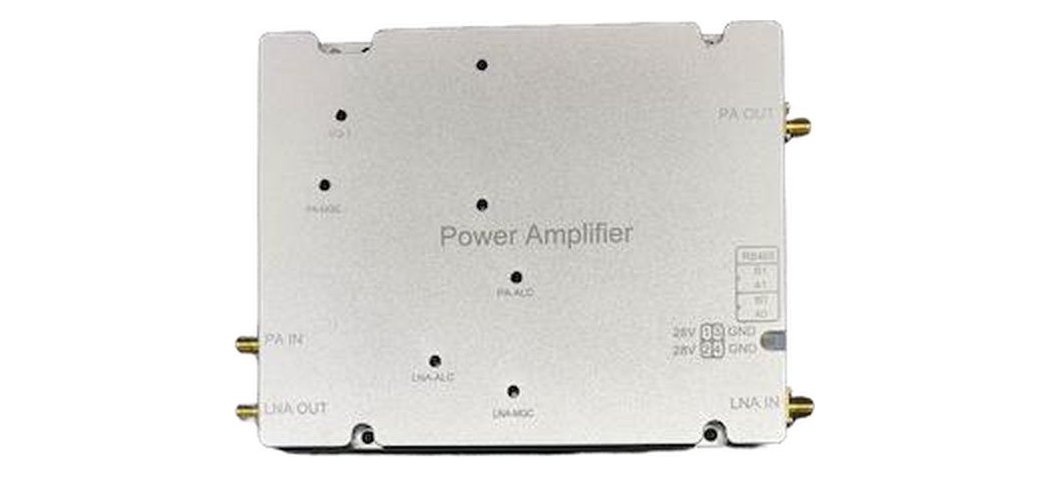
Amplifier modules
RF power amplifier modules (up to 24, 33 and 43 dBm output), also supplied separately for your own designs.
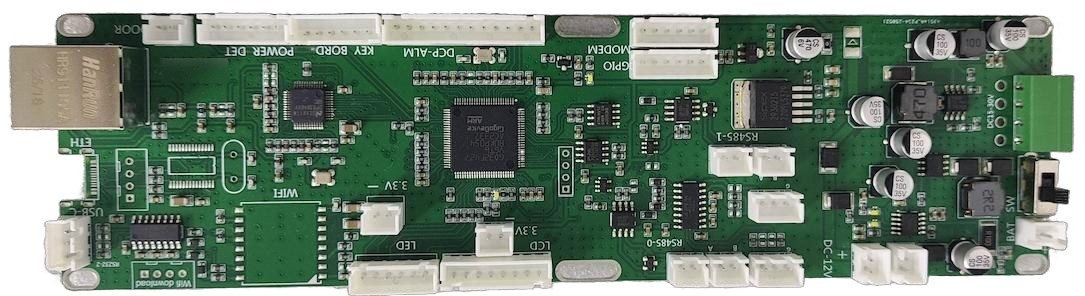
Controller mainboard
The same controller across all power classes, also supplied separately for your own designs.
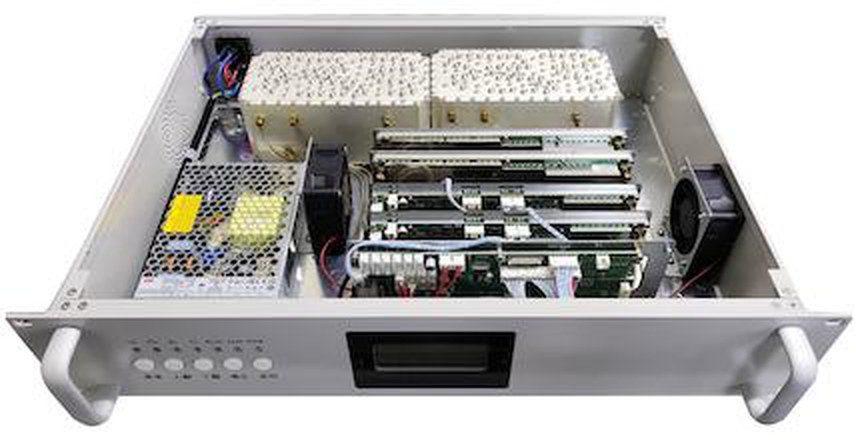
Modular assembly
Rack units and outdoor cabinets share the same module bays; combiners, amplifiers and controller are separate modules.
How a project runs
From your requirements to units under your brand. Rays Technology (Brussels, KBO/BCE 0797.331.189) is your single contracting party: we write the build specification, manage its revisions and review the test data of every unit before delivery; every unit ships with its test record.
The seven steps
- 01
Concept
We write your requirements down as a build specification: bands, sub-bands, gain and power, enclosure, alarms and interfaces.
- 02
Design
We put the band plan, power class and enclosure together from our RF modules, combiners and controller, and issue the first revision of the build specification.
- 03
Prototype
A first unit is built to the build specification and measured against it; we review every result.
- 04
Verify
You receive the measurements and review the prototype; we revise the build specification with your comments.
- 05
Pilot run
A first small series is built, and each unit is tested before delivery.
- 06
Qualify
You run your own product qualification, starting from the datasheets, drawings and test data we deliver.
- 07
Production
Units are built to the current revision of the build specification, under your brand or ours, from repeat orders to mass-production programmes.
What to send us
Six points are enough to start a build specification.
The six points to send
- Bands — the bands and sub-bands to carry, uplink and downlink
- Power class — output power and gain
- Enclosure and mounting — indoor or outdoor; wall, rack or cabinet
- Interfaces — per build specification (e.g. alarm contacts, Ethernet/SNMP, fibre); local and remote management
- Branding — your name on the nameplate and the management interface, or ours
- Expected volume range — the quantities you expect, as a range
Documentation delivered
The documentation follows the revision of the build specification you qualified.
The full documentation list
- Datasheets
- Block diagrams
- Mechanical drawings
- Interface descriptions
- Test data per unit
- Management software and firmware
With these, your own product qualification starts from a complete file.
Your product line, specified and checked
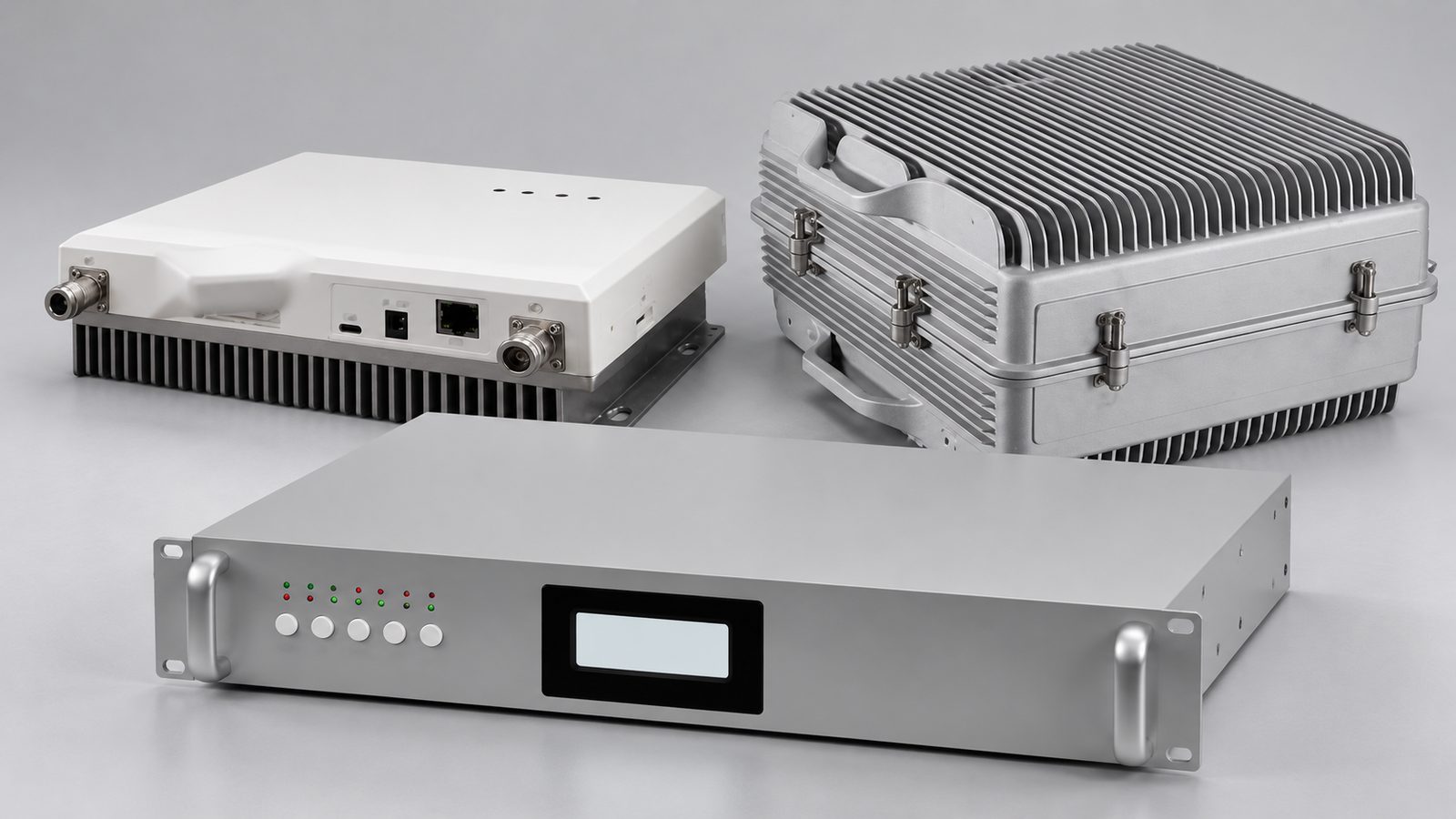 Illustration
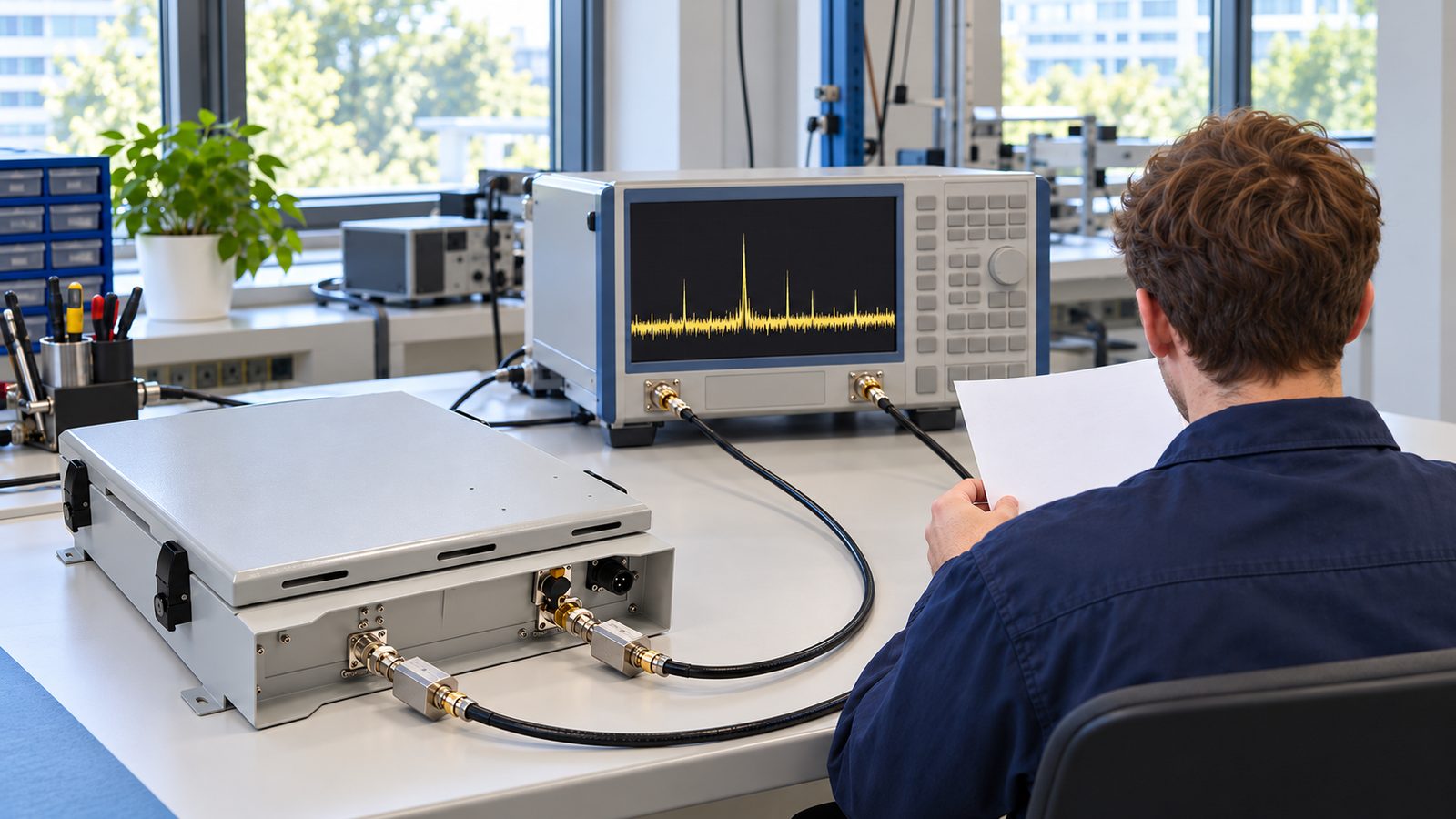 Illustration
s of typical sites and work, not of a specific installation.
Continuity of your product line
What applies once your units carry your name.
- After your qualification, any change to a component, module or firmware that affects function or documented values is notified to you in writing, with the updated documents, before it applies to your units.
- The build file of your line — build specification, drawings, interface descriptions and test procedures — is part of the documentation you receive.
- Repairs and replacement modules by serial number, diagnosed from the unit's test record.
Three more commitments
- White-label: the nameplate, the local web page, the desktop management application and the remote console can carry your name. The management server runs within the EU or on your own server, as you require.
- Firmware is delivered as release builds for the build-specification revision you qualified; updates for that revision are provided on request, or together with a change notice.
- We can sign your non-disclosure agreement before you send requirements.
Tell us about the product line
Bands, power class, enclosure and mounting, interfaces, branding and the expected volume range: these six points are enough to start a build specification. If you need a non-disclosure agreement first, we can sign yours before you send requirements.
- A first build specification for your review
- The building blocks and enclosure that fit it
- The list of what we still need from you, such as drawings or interface details
You can attach drawings or a requirements document here, or send them by email later.